
Written by David Klein
No matter where you live, it feels like no one can afford housing anymore. Rents are climbing, homeownership feels out of reach, and the dream of stability is slipping further away for millions of families. Everyone’s asking how we can make housing affordable.
But to build a future where everyone has access to a safe, stable home, we first need to understand what “affordable housing” really means.
What “Affordable Housing” Technically Means
When we talk about affordable housing, we’re oftentimes referencing different things. The term gets used to describe everything from government-subsidized apartments to a market-rate home that doesn’t break the bank. That confusion makes it more challenging to have productive conversations about how to fix the housing affordability crisis.
In policy terms, the U.S. Department of Housing and Urban Development (HUD) defines affordable housing as housing that costs no more than 30 percent of a household’s income, including utilities. If you spend more than that, you’re considered “cost-burdened.” For millions of renters, this reality means stretching paychecks thin each month just to stay housed.
But within that broad definition, there are two key categories:
- Capital-A “Affordable Housing”: This refers to income-restricted housing that’s supported by public subsidies or incentives. These homes are intentionally kept below market rate for people earning specific percentages of the area median income (AMI). They’re typically funded through programs like the Low-Income Housing Tax Credit (LIHTC), Section 8 vouchers, local housing trust funds, or other government partnerships.
- Lowercase “affordable housing”: This describes homes that are affordable to typical residents without a government subsidy. Essentially, housing that’s naturally affordable because it was built decades ago or because there’s enough new housing supply to keep prices in check. Economists often call this “market-rate affordable” housing, which emerges when older homes “filter down” to become more accessible over time.
Many people assume that “affordable housing” only means government-funded or income-restricted homes, but affordability can come from multiple sources. Both categories are vital parts of a healthy housing ecosystem.
To make housing affordable for everyone, we need to build and preserve homes across the entire income spectrum. That means embracing both subsidized and unsubsidized housing as essential pieces of the same solution.
Subsidized Housing: Filling the Gaps
Subsidized housing plays a crucial role for very low-income households who simply can’t afford market rents, even in a well-functioning housing market. These homes are reserved for people earning below certain income thresholds, often 30%, 50%, or 80% of the area median income, and they ensure that the people most at risk of homelessness or displacement have a safe, stable place to live.
Programs like the Low-Income Housing Tax Credit, Section 8 vouchers, and local housing trust funds are the backbone of this system. They make it possible for nonprofit and mission-driven developers to create homes that would otherwise be financially impossible to build.
But while subsidized housing is essential, it alone can’t meet the scale of the crisis. The U.S. is short millions of homes across all price points, and public subsidies reach only a fraction of those who qualify for assistance.
Unsubsidized Housing: Expanding the Pie
That’s where unsubsidized, or market-rate, housing comes in. When cities allow new homes to be built, whether apartments, townhomes, or duplexes, they help prevent bidding wars for the limited housing that already exists. New homes, even if expensive at first, relieve pressure on older units, allowing them to “filter” down to become more affordable over time.
Without that continual addition of new supply, demand spills over into older, lower-cost housing stock. The result? Increased rents that displace longtime residents, and deepen inequality. By contrast, when new homes are added at the top of the market, they free up space throughout the system.
YIMBYs support both public investment and private homebuilding because affordability is not an either/or question, it’s a both/and equation. Subsidized homes provide a lifeline for low-income families, while market-rate homes keep the overall system from collapsing under scarcity.
When we say “Yes In My Backyard,” we’re saying yes to more homes of every kind, so that everyone, from a single parent using a housing voucher to a young family buying their first condo, has a fair shot at stability.
To Make Housing Affordable, We Must Make It Abundant

If scarcity fuels our housing crisis, then abundance is the cure. True housing abundance means that everyone, from low-income renters to middle-class families, can find a home they can afford, in a community where they can thrive.
Achieving that vision requires both halves of the equation working together:
- Subsidies ensure inclusion and provide a safety net for those the market alone can’t reach.
- Market-rate construction ensures there are enough total homes so that everyone, at every income level, has a place to live.
When those two forces align, affordability stops being a constant crisis and becomes a built-in feature of how our cities grow.We’re already seeing early examples of abundance take shape across the country.
In Minneapolis, the city eliminated single-family-only zoning, legalized triplexes on every lot, and reformed parking requirements. The results? Housing supply grew faster than in comparable cities, and rent growth slowed dramatically.
In Austin, years of YIMBY advocacy helped the city overhaul outdated codes and remove parking minimums, freeing up land and budgets for more housing. Home builders, nonprofits, and the city itself are now working together to produce thousands of new homes, from subsidized units to market-rate apartments.
And in Portland, reforms that legalized duplexes and fourplexes in single-family zones have started to open the door to “missing middle” housing which are smaller, neighborhood-scale homes that keep families near jobs, schools, and transit.
Each of these cities shows a piece of the same puzzle: when we say yes to more homes of all kinds, affordability follows.
How YIMBYs Are Helping Create Affordable Housing
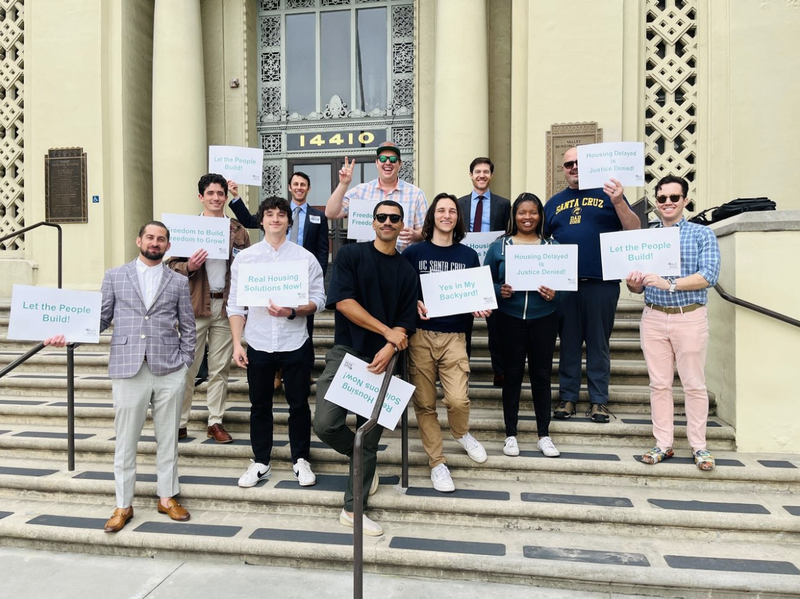
The YIMBY movement exists to unlock this vision of housing abundance. By updating zoning laws, supporting pro-housing leaders, and mobilizing thousands of advocates across the country, YIMBYs help communities move beyond scarcity toward a future where housing isn’t a privilege, it’s a foundation for thriving lives.
The path forward is clear: say yes to more housing, in every neighborhood, because every community deserves enough homes. At YIMBY Action, we’re working to make housing abundance the norm, not the exception. From ending exclusionary zoning to funding affordable housing and speeding up permitting, our members are pushing for the local and state reforms that will create more homes for all of us.Every new home, every vote, and every voice in favor of abundance moves us closer to a country where housing is affordable, sustainable, and inclusive.
You can be part of that movement. If you want to help us create affordable housing options for everyone, join our mailing list to stay informed about pro-housing activism in your area.